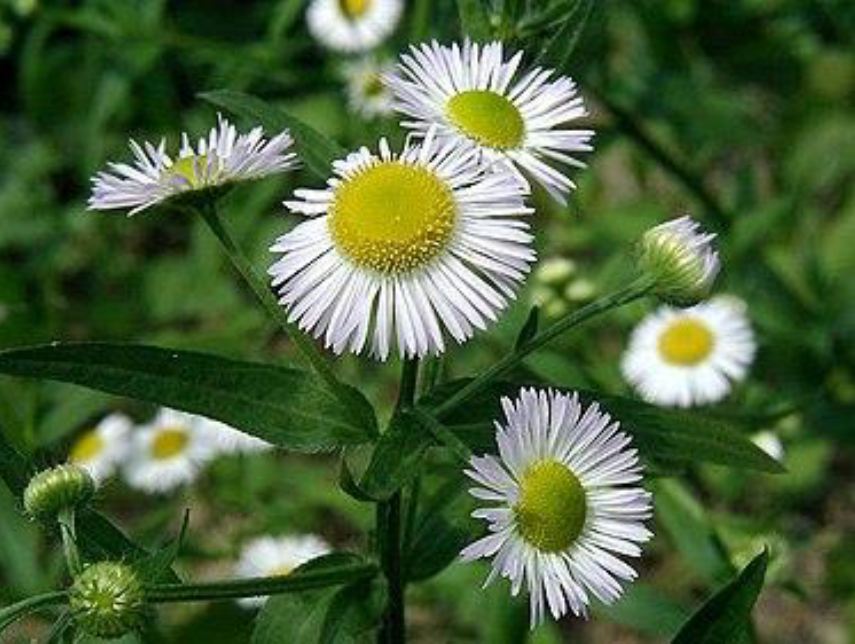
Himejyoon usually blossoms from May to October, when they grow up sunny place sometime from April. Himejyoon’s flowers are look like an aster, daisy, and chrysanthemum. Also there is a similar kind of plant called Harushion. Himejyoon usually blossoms later and it grows up taller than Harushion.
Benefits and Effects:
Himejyoon is rich in antioxidant polyphenols, containing twice as much as blueberries, making it a highly effective anti-aging herb.
• It provides a range of health benefits, including diabetes regulation (regulating blood sugar levels), detoxification, antifebrile, hemostatic, and
support for gastritis, enteritis, indigestion, diarrhea, abdominal pain, and improvement of hepatitis.
• It also aids in promoting skin health, possesses anti-aging properties, and can help reduce edema (swelling). Additionally, it has been used as a
remedy for toothaches.
How to Consume:
Young shoots can be added to namul or miso soup, served with salad, soaked vegetables, or used as tempura.
Enjoy its unique aroma when cooked similarly to butterbur miso. The bitterness increases when the flowers start to bloom, so if you prefer a milder taste, pick the young shoots early and cook them accordingly.